


How to Test the Tractor Protection Valve on the Washington CDL Exam
August 21, 2026
The Pre-Trip Inspection stresses out many students because of how many details they have to memorize. Inspecting your air lines and brake valves can feel confusing and overwhelming if you’re new to commercial trucks. But here’s the truth: you don’t need to be a mechanic to get a passing mark on your test.
Our instructor, Gary Logan, brings 15 years of driving experience in the US and UK to our training yard in Fife. He focuses heavily on the step-by-step of the Pre-Trip Inspection when training our students and how the protection valve safety check ensures that your truck can stop if an air line snaps on the highway.
What Is the Tractor Protection Valve and How Does It Work?
The tractor protection valve keeps air in your tractor brake system if your trailer breaks away. It protects your main air supply so you can still stop your truck safely.
During normal driving, air flows through the protection valve to keep the trailer brakes released. If a gladhand disconnects or a hose bursts, air leaks out fast.
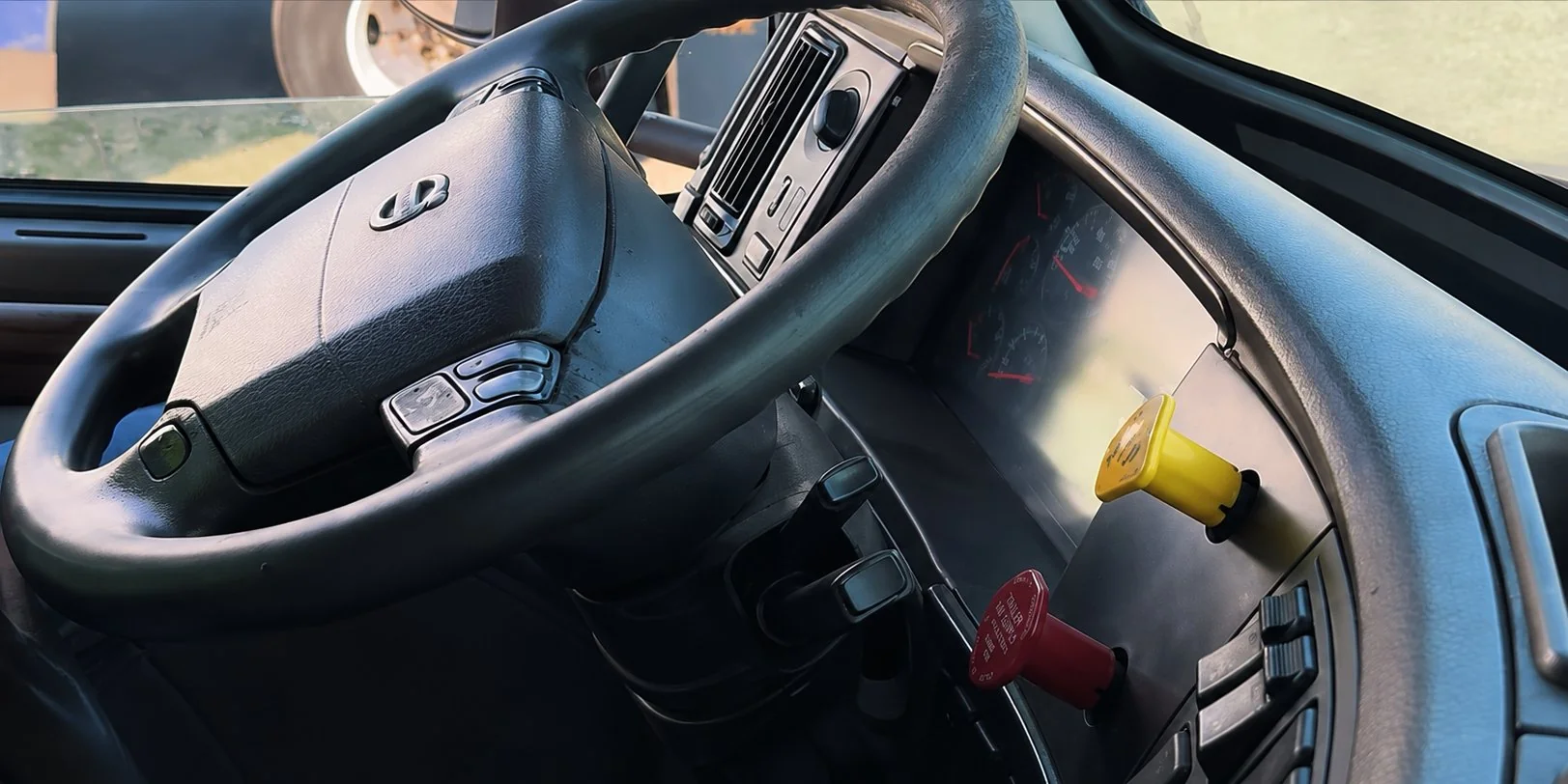
The tractor protection valve closes automatically when air pressure drops too low. This action pops out the red trailer air supply valve in your cab, which locks the trailer emergency brakes to stop the trailer instantly.
How Do You Perform the Tractor Protection Valve Test on Your CDL Exam?
The Washington State Department of Licensing examiner needs to see you test this system correctly. Gary breaks the tractor protection valve test into clear steps that build real muscle memory. Here's a quick video of Gary sharing some Pre-Tip Inspection tips.
1. Build Pressure and Turn Off the Engine
First, you need to start your engine and build air pressure until the governor cuts out between 120 and 140 PSI. Shut the engine off completely and then, turn the key back to the "ON" position so your dashboard gauges light up.
2. Push Both Valves In
Push in the red trailer air supply valve and the yellow parking brake valve. This releases all spring brakes and charges the entire air system.
3. Fan the Foot Brake
Fan the foot brake pedal repeatedly to bleed air out of the system. Watch your primary and secondary air pressure gauges closely as the needles drop.
4. Watch for the Red Valve to Pop
Listen for air escaping and watch your red trailer air valve carefully. The red valve must pop out automatically between 20 and 40 PSI.
5. Check the Yellow Parking Brake Valve
Continue fanning the brake pedal after the red valve pops. The yellow parking brake valve must also pop out to set the tractor spring brakes.
What Key Words Should You Say Out Loud During the Air Brake Test?
You can’t do the air brake test silently during your CDL exam, state examiners will definitely require you to explain what you’re doing as you perform each action.
Gary teaches students to use these phrases out loud:
- Charging the system: "I am pushing in both valves to release the spring brakes and charge the air lines."
- Low air warning light: "My low air warning light and buzzer activated before air pressure dropped below 55 PSI."
- Tractor protection valve pop: "The red trailer supply valve popped out between 20 and 40 PSI to protect my tractor air supply."
- Parking brake valve pop: "The yellow parking brake valve popped out to set my tractor spring brakes."
Speaking every step out loud prevents you from skipping crucial safety checks on test day.
What Common Air Brake Mistakes Cause Students to Fail?
Most air brake failures come from rushing or forgetting the correct sequence. Here’s how Gary helps students avoid 3 most common mistakes during practice:
- Forgetting to turn the key back on: If the key stays off, your electric low air warning lights and buzzers won’t turn on.
- Not waiting for the governor cut-out: You must let air pressure build fully before starting your leak tests.
- Mixing up PSI numbers: Always remember that low air warnings turn on above 55 PSI, and protection valves pop out between 20 and 40 PSI.
It’s important to remember that taking a quick two-second breath before each step also helps you keep your mind clear, calm and better focused.
How Does New Sound CDL School Teach the Air Brake Inspection?
We don’t expect you to become a mechanic or learn complex air systems from a textbook alone. We’ll place you inside real trucks on our paved training yard in Fife from day one so our instructors can guide you through the full air brake sequence until every valve check feels natural.
We keep class sizes small so you get plenty of time sitting in the cab and practicing valve checks. Learn more about our hands-on approach by reading why hands-on CDL training is the best way to learn.
Frequently Asked Questions
At what PSI should the tractor protection valve pop out?
The red tractor protection valve must pop out automatically between 20 and 40 PSI during your air brake test.
What happens if the protection valve does not pop out during the test?
If a valve fails to pop out within the required PSI range, the vehicle is unsafe. If you realize you missed a step in the process, immediately stop and ask the examiner if you could restart that portion and state what you forgot. By showing that you’re aware of the correct procedure, they will allow you to do it again if you haven’t yet finished.
Do I need to be a mechanic to learn air brakes?
No, you don’t need any of that. Our instructors break the system down into simple steps for anyone to learn the process quickly. They’ll be teaching you all along the way.
Ready to Start Your CDL Training in Fife?
Learning air brakes is easy when you have experienced instructors guiding you step by step. Our team in Fife is more than prepared to help you build confidence and start a successful career in trucking.
Contact us at 253-777-3800 or visit our training yard in Fife to tour our facility today!